iTractor: yield monitoring in vineyards and orchards with stereoscopic cameras
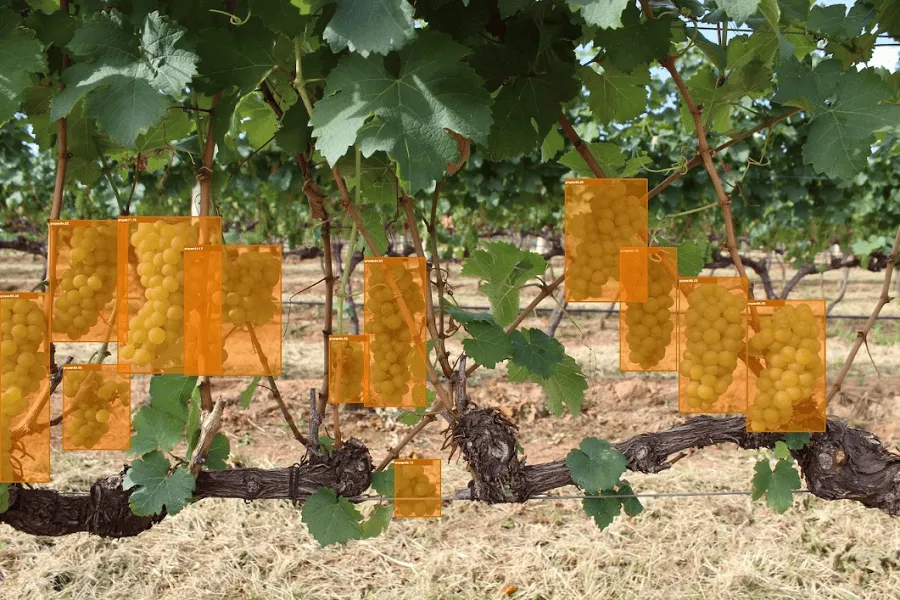
Vineyard yield monitoring and forecasting with a tractor-mounted camera
Introduction
In modern agriculture, monitoring production and estimating yield are operations of fundamental importance, but also extremely complex ones. Fortunately, thanks to continuous technological progress, we now have a wide range of tools and methodologies that allow us to tackle these challenges with greater precision and efficiency.
In the wine sector, for example, traditional yield estimation techniques, such as manually counting bunches per unit area or weighing them on scales, often prove inaccurate and require considerable labour. The introduction of remote sensing has certainly revolutionised this practice. By using remotely sensed images, it is now possible to monitor plant health and correlate their vigour, using indicators such as the NDVI index, with grape production. This non-destructive approach makes it possible to obtain good yield forecasts, although these can still be affected by extreme events such as hailstorms or water stress.
A further revolutionary methodology is proximal sensing, which uses Computer Vision techniques and Artificial Intelligence (AI) algorithms to analyse images directly in the field. This approach makes it possible to detect bunches, and even individual berries, directly and non-destructively, on a continuous basis.
iTractor: Proximal Sensing, Computer Vision and AI
iTractor is a stereoscopic camera rental service which, once mounted on tractors, makes it possible to collect accurate data throughout the growing season. These cameras enable precise yield estimation, providing information about the fruit and identifying any signs of disease, thanks to the use of advanced Computer Vision and AI algorithms.
iTractor is set up by mounting a dual camera on the front of the tractor, covering both sides of the vineyard row. This optimal arrangement makes it possible to handle partially covered bunches as well, ensuring an accurate estimate of production, including what is present under the plant canopy. The system works by first identifying a specific area of analysis (Fig. 1); a cloud-based AI unit then processes the data collected and, by segmenting the areas of interest — which can include individual bunches — arrives at a count of the berries themselves. The use of automated algorithms eliminates human error and simplifies data processing, enabling a fast and reliable assessment of the vineyard.
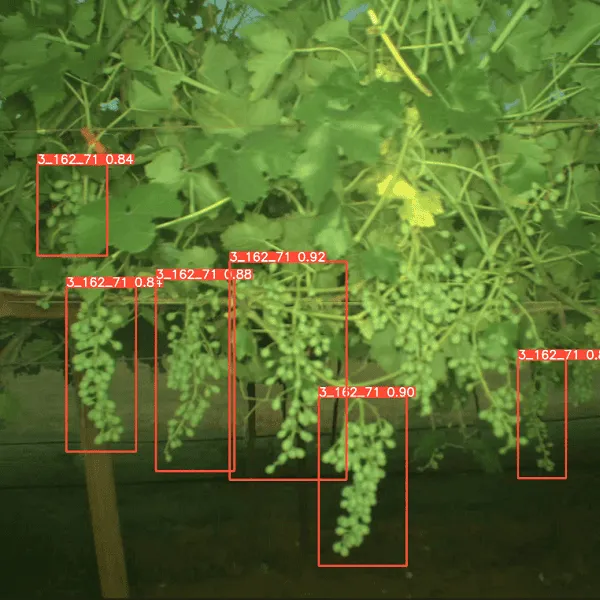
Fig.1: Bunch identification using a tractor-mounted camera.
The system is simple to install and only requires a 12-volt power supply. The latest version of the camera features improvements to GPS and RTK, ensuring greater accuracy in the results. In addition, the presence of two parallel LEDs allows for optimal operation in various low-light conditions, such as early morning or late evening, when the cool of the day favours field work. The results obtained from this system show an accuracy of over 90%, with a 10% margin of error in detail detection. These results are provided both in raw format and as maps, including already-processed yield data (Fig. 3).
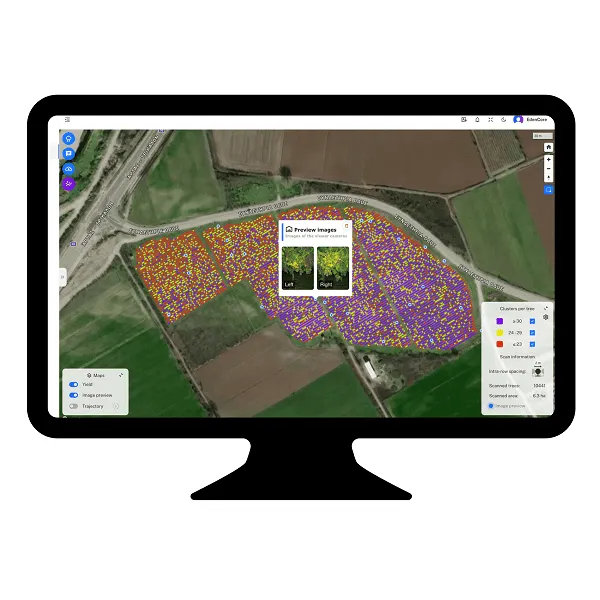
Fig.2: Example of a vineyard yield map.
Conclusions
The complexity and variability of environmental conditions, often influenced by climate change, call for a continuous approach to research and innovation in order to adapt monitoring and estimation methods to new conditions. The adoption and development of advanced technologies and accurate data collection are essential for tackling current and future challenges in the agricultural sector, ensuring more efficient, sustainable and resilient crop management.
Accurate data collection emerges as a fundamental element in tackling future challenges and ensuring the sustainability and resilience of the agricultural sector. Knowing your fields well allows for more effective, informed management, and so services such as iTractor represent valuable resources for meeting this challenge, enabling not only precise yield estimation, but also the timely identification of any disease-related risks.
The use of tools such as iTractor provides objective data that helps mitigate the risk of errors in estimates, thereby ensuring greater safety and reliability in farming operations.
In situations involving damage, such as hailstorms, wildlife, etc., this objective data can help assessors evaluate the damage, significantly reducing the margin of error.
For more information, visit the page dedicated to iTractor and contact us for details!