
Voices from the field: Mulini di Segalari
Precision agriculture and drones: the experience of the Mulini di Segalari winery in Bolgheri
The company
The Mulini di Segalari winery was founded in 2002 out of a shared passion for viticulture between Marina Tinacci Mannelli, an architect, and her husband, winemaker Emilio Monechi.
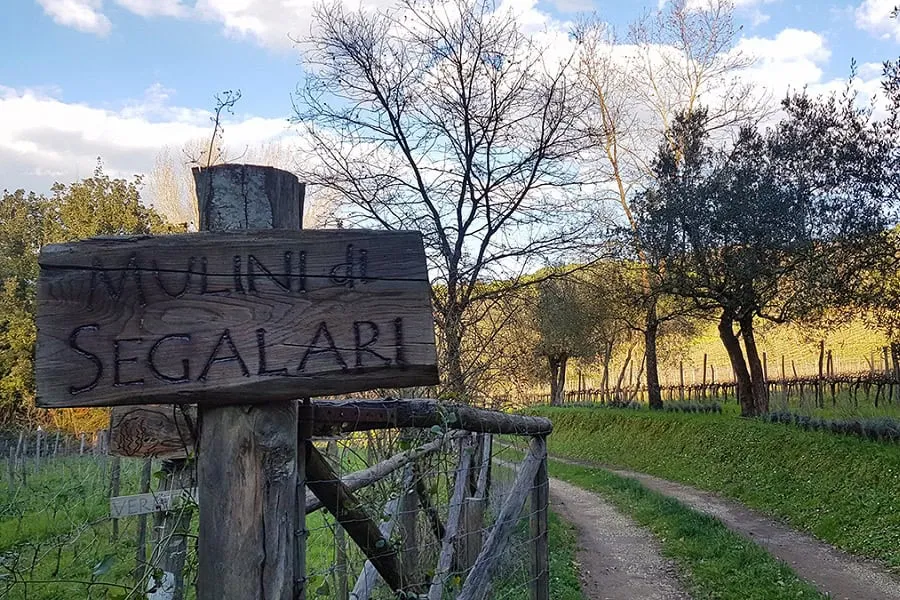
The estate is located in Castagneto Carducci (LI), a few kilometres from the centre of Bolgheri. It is an unspoilt, wild place, characterised by woodland and a stream that runs along the estate.
The red grape varieties grown on the estate are classics of DOC Bolgheri: mostly Cabernet Sauvignon and Merlot, along with Petit Verdot and Syrah, as well as Sangiovese, Ciliegiolo and Pugnitello. The white grape varieties are Vermentino, Manzoni Bianco and Viognier.
The estate has always remained true to its bond with nature: it has been biodynamic since 2017, organic since it was founded, and over the years it has taken advantage of the benefits that technology can offer even small businesses.
1. How did you discover Agrobit?
I met Niccolò (COO) and Simone (CEO/CTO) at a conference at the University of Pisa, where they were giving a talk. Having understood what they did, I became interested. At the end of their talk I got in touch with them and arranged a meeting at the estate to see whether we could start working together.
2. What were your needs before you got to know Agrobit, and which services did you choose?
My request was to get an overall view of our vineyards, one that was deeper and more alternative than the single perspective you get from ground-based analysis. I liked the idea of the drone because it offered a new point of view and would allow us to assess our vineyards using a vigour map, to understand which vines were more or less fertile.
3. What were your initial expectations?
My idea was to check the correlation between a plant’s higher vigour and a greater abundance of bunches, compared with areas of lower vigour and therefore fewer bunches. The goal was to move towards a selective grape harvest every year.
4. What benefits have you gained from using Agrobit’s services?
What interested us most about the drone was monitoring vegetation, clearly with a view to optimising the harvest. So far, with Agrobit we have developed this particular aspect, because harvesting according to the different vigour zones means that, by the time of harvest, we already have a different wine quality based on objective rather than subjective parameters.
5. Are you satisfied with how our team has handled your requests?
I am absolutely satisfied, and I am very keen to keep developing the collaboration further. Even though we are a small business with certain limitations, we are absolutely open to experimentation too. For example, we are currently involved in the iVine project (Tuscany Region RDP – sub-measure 16.2), in which Agrobit itself is the lead partner, where we are aiming to use variable rate technology to modulate crop protection treatments according to the varying vigour of the plants.
6. Based on your personal experience, what would you say to someone considering using our services?
Based on my experience, I can say that using drones and working with Agrobit is absolutely much more accessible, practical and simple than a farmer might imagine. The drone is a means of making informed agronomic decisions based on data, objectively, but more generally, using a smartphone (editor’s note: see the iAgro app) is also a much more practical, immediate and accessible solution than what people generally imagine in terms of cost and time commitment.
7. What suggestions or advice would you give to those who want to get the most out of the Agrobit services you have used?
I would suggest being open-minded, trying things out, and requesting demonstrations and quotes as a first approach, to try to understand how this kind of technology can really help effectively — not only at harvest time, in the case of viticulture, but also at other times and for other crops, such as with irrigation, fertilisation, treatments, and so on. I am sure that businesses need to be less shy and a bit more courageous.
8. What are the future developments for Mulini di Segalari?
We already practise precision viticulture, but soon I would like to be able to apply the same techniques to olive growing, which is another secondary product for us. Going forward, I will be working with Agrobit to figure out together how to open this new chapter.
Watch the extended video interview at the following link!