
ACA24 opportunity and the Agricultural Innovation Fund
Introduction
This article aims to summarise two important opportunities for the development of the agricultural sector: the Agricultural Innovation Fund and the ACA 24 – SRA24 call. Both aim to spread tools and technologies to support agricultural innovation projects and improve resource use.
Agricultural Innovation Fund
The Agricultural Innovation Fund was established by the 2023 budget law (Art. 1, paragraphs 428 et seq. of Law 197/2022) with the goal of promoting innovation projects aimed at improving productivity in the agriculture, fishing and aquaculture sectors. This support for innovation is based on the adoption of technologies for the digital management of farm businesses, the use of machinery, robotic solutions, sensors, 4.0 platforms and infrastructure, the promotion of water savings and the reduction of chemical substance use.
Who it is for:
The beneficiaries of this fund are small and medium-sized enterprises (SMEs), whether individual or associated, including their cooperatives and associations, that are registered as an “agricultural business”, “fishing business” or “agri-mechanical business” in the Business Register, have an operational base in Italy, and have been active for at least two years at the time of application. They must also make technological innovation investments of between €70,000 and €500,000, while for the fishing sector the minimum investment limit is set at €10,000.
What the fund covers:
The Agricultural Innovation Fund finances the purchase of:
- machinery, drones, tools and equipment for agriculture;
- machinery for livestock farming;
- Stage V-powered agricultural tractors.
The specifications for each type of investment are defined in the call. Items eligible for funding must be brand new and must remain tied to the beneficiary’s activity for at least five years.
Fund size:
The Agricultural Innovation Fund makes available €75 million for each of the years 2023, 2024 and 2025. The support takes the form of a non-repayable grant, the amount of which varies depending on the sector in which the SME operates and the amount of eligible expenses. The grant is calculated by applying the percentages set out in the Ministerial Decree of 9 August 2023, published in Official Gazette No. 240 of 13 October 2023, to the aid ceilings set by each sector regulation; these percentages range from 45% up to 100% of eligible expenses.
Disbursement method:
The non-repayable grant is disbursed in a single payment. Alternatively, the beneficiary can arrange for the grant payment to be made, in its name and on its behalf, by ISMEA directly to the supplier.
Submitting the application:
An SME wishing to access the incentives submits the relevant application, using the forms provided by ISMEA on the dedicated portal. Applications for access to the incentives are reviewed by ISMEA in chronological order of submission.
ACA 24 – SRA 24 Precision agriculture practices
Objectives:
The intervention aims to contribute to climate change mitigation and adaptation capacity, including through the reduction of greenhouse gas emissions and improved carbon sequestration, and to promote the efficient use of natural resources such as water, soil and air. ACA 24 has currently been included in the support schemes of 9 Italian regions: Basilicata, Calabria, Campania, Lazio, Liguria, Piedmont, Puglia, Tuscany and Umbria.
What the support consists of:
ACA 24 provides annual support per hectare for farmers who commit to adopting at least one precision agriculture practice, such as the use of satellite and drone imagery, forecasting models, DSS, GNSS systems on tractors, variable rate (VRT) agricultural machinery, IoT sensors, etc., to improve production efficiency and reduce pesticide input.
Implementation:
The intervention consists of 3 actions that can also be adopted simultaneously on the same area:
- Action 1: Adoption of precision techniques – Fertilisation
- Action 2: Adoption of precision techniques – Crop protection treatments
- Action 3: Adoption of precision techniques – Irrigation
Type of support:
The support is an annual payment granted per agricultural area subject to commitment, with amounts varying by action and crop group.
Who can apply for support and minimum areas:
The beneficiaries are:
- farmers, whether individual or associated;
- public bodies managing farms.
Herbaceous, vegetable and tree crops are eligible. For Tuscany, the minimum area subject to commitment is 3 hectares for herbaceous crops and 1 hectare for vegetable and tree crops. The areas for which the payment is requested must fall within the regional territory.
Payment rates:
The support consists of the payment of an annual premium per hectare of agricultural area covered by one or more precision agriculture actions, even on the same area. The premium per hectare varies by action (1, 2 and 3) and by crop group (herbaceous, vegetable and tree) (Table 1).

Table 1: Premium amounts per hectare by action type and crop group for the Tuscany region.
The overall amount of support is subject to the principle of degressivity, based on the total area covered by each action and crop group under commitment (Table 2).

Table 2: Degressivity principle for the Tuscany region.
Combinability: ACA 24 can be combined with other interventions, as summarised in Table 3.
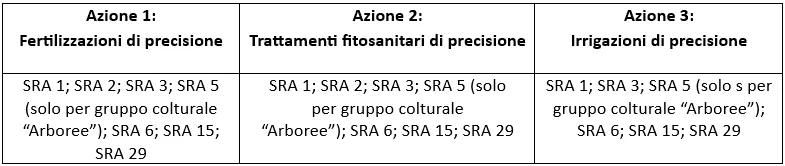
Table 3: Combinability with other interventions.
Call and application deadline:
The ACA 24 call was expected to be published by 30/11/2023, while support applications had to be submitted by 31/12/2023.
Selection criteria:
Priority in selection will be given to farms with a higher percentage of utilised agricultural area in areas of particular environmental value (Natura 2000 sites, protected areas and SIRs), and to areas affected by environmental issues such as Nitrate Vulnerable Zones, according to a scoring scale defined in each regional call.
Commitments to be met:
- Commitment 1: joining a digital services and DSS platform to collect and digitise farm data, along with a log of treatments, fertilisation and irrigation inputs, to support the farmer in strategic decisions.
- Commitment 2: using appropriate precision machinery/equipment for the specific action: – Action 1 – fertilisation must be carried out with appropriate precision machinery capable of applying fertiliser at a variable rate (VRT) by reading prescription maps; – Action 2 – crop protection treatments must be carried out based on forecasting models that estimate the probability of infections and infestations, allowing for timely intervention, including with precision equipment. Weed control using precision equipment based on farm mapping, allowing weeds to be controlled through localised interventions; – Action 3 – irrigation based on the soil water balance principle (e.g. FAO paper No. 56), using appropriate precision equipment capable of varying irrigation inputs according to soil characteristics and/or the use of IoT sensors to measure soil moisture.
- Commitment 3: the area covered by the support application must be maintained for the entire duration of the commitment, with an overall tolerance for reduction of 20%. Furthermore, the area for which the premium is requested with the payment application may involve variable plots; it is therefore possible to change the plots subject to commitment with each year’s application for support, provided the number of hectares remains the same.
- Commitment 4: the beneficiary undertakes to attend a training course and/or acquire an advisory service relating to the precision agriculture practices that can be adopted under the intervention.
Commitment period:
Beneficiaries must comply with the above commitments for a period of 5 years. Each individual year of the commitment refers to the calendar year (1 January – 31 December). The first year of commitment for Tuscany is 2024.